
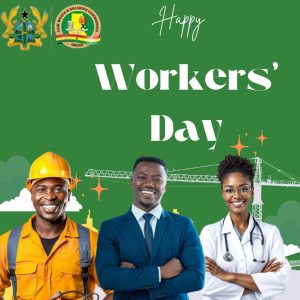
You are the Backbone”: FWSC CEO Salutes Ghanaian Workers This May Day
The Chief Executive of the Fair Wages and Salaries Commission (FWSC), Dr. George Smith-Graham, has described Ghanaian workers as the indispensable “backbone” of the country’s socio-economic development.
In a May Day message issued to mark International Workers’ Day, Dr. Smith-Graham lauded the resilience of professionals across all sectors—from rural farmers and artisans to frontline healthcare workers and public servants—while simultaneously signaling a transformative shift toward a more equitable, performance-driven compensation system.
For the FWSC, this year’s celebration serves as more than just a salute to labor; it marks a “critical point” in national reform as the Commission prepares to transition toward an Independent Emoluments Commission designed to ensure that the dignity of labor is matched by the fairness of its rewards.
The End of “One Size Fits All” Pay?
Dr Smith-Graham mentioned the FWSC’s move toward an Independent Emoluments Commission. This new body is set to become the arbiter of public sector pay, designed to strip away the complexities and perceived unfairness of the current system.
He signaled a departure from traditional wage negotiations, moving instead toward a system that explicitly ties the “size of the paycheck” to the “impact of the work” as the FWSC transitions into an Independent Emoluments Commission.
The goal, according to the CE, is threefold: transparency- making pay structures clear to all; equity—closing the gap between different sectors of the public service and sustainability-ensuring the government can afford the wage bill without crashing the economy.
Efficiency as the New Currency
Dr. Smith-Graham was candid about the future of the public service, stating that the Commission is intensifying efforts to link pay to performance.
”Our vision is to build a system where excellence is recognized and innovation is rewarded,” he said. This shift suggests that the “business as usual” approach to annual increments may soon be replaced by rigorous performance assessments, ensuring that those who drive the country forward see the most benefit.
A Call for Industrial Peace
Recognizing the tension that often surrounds wage discussions, the CE appealed to Organised Labour and Employers to maintain a “social dialogue.” He warned that improvements in conditions of service are only possible if they are anchored on fiscal discipline.
”Sustainable improvements must be anchored on productivity… we call for continued collaboration to sustain industrial harmony,” the statement noted.
Focusing on the Human Element
Despite the focus on reforms and fiscal numbers, Dr Smith-Graham’s message was rooted in gratitude. He described the diverse workforce—from the artisans in the streets to the security services in the barracks—as the primary engine of Ghana’s development.
He urged workers to view their jobs not just as a means to an end, but as a “service to Ghana and future generations.”
Recent Comments